

Call us now
08045804958

 Send Inquiry
Web Tension Control System
Price 80000 INR/ Piece
MOQ : 1 Unit
Web Tension Control System Specification
- Power Supply
- 220 V AC, 50/60 Hz
- Response Time
- 50 ms
- Operating Voltage
- 24 V DC
- Measuring Range
- 0-10000 N
- Display Type
- Digital LED/LCD
- Voltage
- 0 - 24 V DC Volt (v)
- Specimen Size
- Customizable
- Gas Pressure
- 6 bar (Max)
- Temperature
- 0 C to 50 C
- Number of Specimens
- 1
- Humidity
- 20% ~ 85% RH
- Color
- White
- Material
- Mild Steel
- Features
- Closed loop control, real-time monitoring, set point adjustment
- Interface Type
- RS-485/Analog Output
- Max Height
- 1500 mm
- Accuracy
- 0.5%
- Frequency
- 50/60 Hz
- Mounting Type
- Panel/Wall Mounted
- Usage
- For Industrial Use
- Port Size
- 3/8 BSP
- Automation Grade
- Automatic
- Equipment Type
- Web Tension Control System
- Product Type
- Tension Control System
- Test Range
- 10 N to 10000 N
- Application
- Suitable for continuous processes involving films, foils, paper, textiles, and other web materials
- Resolution
- 1 N
- Capacity
- Up to 2 Tons
- Machine Weight
- 120 kg
- Test Speed
- 0.5 to 400 m/min
- Test Width
- Up to 2200 mm
- Test Stroke
- 300 mm
- Data Logging Capability
- Supported (USB/SD Card Option)
- Product Type
- Tension Control System
- Sensor Type
- Load Cell Based
- Material
- Mild Steel
- Color
- White
- Controller Type
- PID Controller
- Ingress Protection
- IP54
Web Tension Control System Trade Information
- Minimum Order Quantity
- 1 Unit
- Payment Terms
- Cash in Advance (CID), Cash Advance (CA)
- Supply Ability
- 1 Unit Per Day
- Delivery Time
- 2 - 3 Days
- Packaging Details
- Carton Box
- Main Domestic Market
- All India
Web Tension Control System About
Our provided Web Tension Control System super-cedes all the other types of controllers or highly advances in technical performance. Our offer tension controllers is known for their unique features like it is having over current, over heating protection switching power supply, long-term reliable operation, calculus by the algorithm can achieve taper tension control, automatic recognition, automatic adaptation electric speed startup mode and stable tension control without overshoot. Further, our offered Web Tension Control System is capable of controlling web tension in unwind, rewind, point-to point or dancer applications.
Technical Specification
| Power supply | 24 Vdc (+- 10%) |
| Strain gauge amplifier | 1 Channel |
| Input voltage | 20 mV |
| Bridge supply | 10 V |
| Guiding value/target value/dancer position/ Diameter Sensor | 0-10V |
| Line Speed Input * | 0-10V |
| Electric brake / coupling | PWM current output 0 to 2A/24 V |
| Controller actuating signal | 0 to 10 V |
| Monitor output | 0 to 10 V |
| Digital inputs | 1. Auto/Manual |
| Working temperature | +10 C to +50 C |

Precision Tension Measurement
Achieve consistent tension with load cell-based sensors providing accuracy of 0.5% and resolution at 1 N. The digital LED/LCD display delivers instant feedback and set point adjustments can be made easily, ensuring your web material process remains stable and efficient.
Advanced Controller & Alerts
The integrated PID controller delivers closed-loop control, while alarm functions quickly notify operators of over or under tension situations. The system supports automatic and manual calibration, maintaining reliability and enabling rapid response to process variations.
Industrial Adaptability & Data Logging
Designed for industrial use, this system supports customizable specimen sizes and works with a variety of web materials. Its data logging capability via USB or SD card simplifies traceability and analysis, enhancing process transparency for quality assurance.
FAQs of Web Tension Control System:
Q: How does the Web Tension Control System maintain accurate tension during operation?
A: The system uses load cell-based sensors and a PID controller to monitor and regulate tension in real time, ensuring accuracy within 0.5% and a resolution of 1 N. Closed-loop control dynamically adjusts tension, optimizing performance for continuous industrial processes.Q: What materials and applications are suitable for this tension control system?
A: This system is ideal for processes involving films, foils, paper, textiles, and other web materials. Its designed for continuous operations across industries requiring precise tension control for quality and efficiency, such as printing, packaging, and textile manufacturing.Q: When should the systems calibration method be chosen between automatic and manual?
A: Automatic calibration is recommended for routine, uninterrupted operations needing minimal human intervention, while manual calibration offers flexibility for custom test setups or when accommodating changes in material type or process requirements.Q: Where is the Web Tension Control System typically installed?
A: The system features panel or wall mounting options and is commonly installed near industrial web machinery. Its compact design (max height 1500 mm) fits into existing setups without significant modifications, ensuring seamless integration.Q: What is the process for logging tension test data?
A: Data can be logged in real time using the systems USB or SD card options. This facilitates easy extraction, traceability, and review of process parameters, supporting efficient quality control and batch analysis.Q: How can operators benefit from the alarm function?
A: The over tension and under tension alarm functions help operators respond quickly to deviations, minimizing material waste and downtime. Audible and visual alerts enhance safety and operational reliability during continuous industrial runs.Q: What level of environmental protection does the system offer?
A: With an ingress protection rating of IP54, the system is safeguarded against dust infiltration and splashes of water, ensuring operations remain consistent in challenging industrial environments characterized by varying humidity (20% ~ 85% RH) and temperatures (0C to 50C).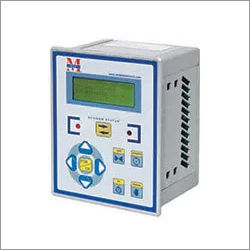
Tell us about your requirement

Price:
Quantity
Select Unit
- 50
- 100
- 200
- 250
- 500
- 1000+
Additional detail
Mobile number
Email

More Products in Printing And Converting Quality Control Instrument Category
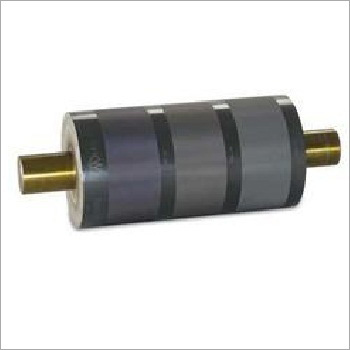
Ceramic Anilox Roll
Price 150000 INR / Piece
Minimum Order Quantity : 1 Unit
Usage : Printing Industry
Product Type : Anilox Roll
Color : Grey
Material : Stainless Steel
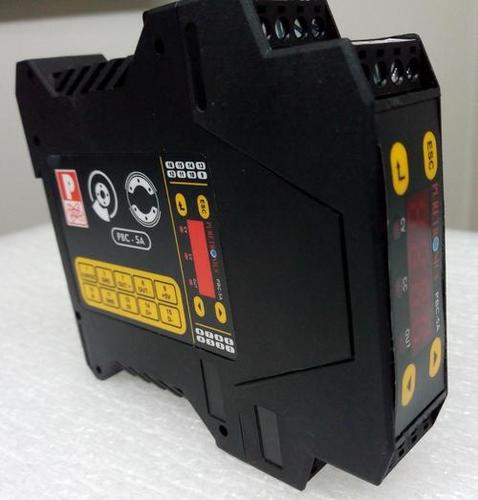
DC Motor Controller
Price 16000 INR / Piece
Minimum Order Quantity : 1 Piece
Usage : Motor Speed Regulation

Load Cell Amplifier
Price 12000 INR / Piece
Minimum Order Quantity : 1 Piece
Usage : For Industrial Use
Product Type : Cell Amplifier
Color : Black
Material : Plastic
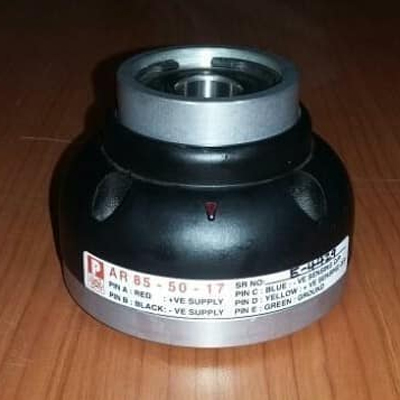
Web Tension Load Cell
Price 12500 INR / Piece
Minimum Order Quantity : 1 Unit
Usage : For Industrial Use
Product Type : Tension Load Cell
Color : Silver & Green
Material : Stainless Steel

GST : 27AANCP5368E1Z1

1ST FLOOR, A-37, Virwani Industrial Estate, Western Express Highway, Goregaon East,Mumbai - 400063, Maharashtra, India
Phone :08045804958
M/s. Pradnya Prakash Pednekar
(Customer Relationship - Executive)
Mobile :08045804958
 Send Inquiry
 Send Inquiry
 Send SMS
PURETRONICS
All Rights Reserved.(Terms of Use)
Developed and Managed by Infocom Network Private Limited.
Developed and Managed by Infocom Network Private Limited.

